Continental Transit Architecture
North American Commuter Corridors & BRT
North American public transport presents stark contrasts: immense legacy networks running 24/7 juxtaposed against deep automotive subsidies, vast low-density land use, and immense per-mile construction capital costs.
Legacy System Realities
New York City Subway: 24/7 Operations vs Capital Backlog
The Metropolitan Transportation Authority (MTA) operates one of the few four-track rapid transit networks in the world, enabling express trains to bypass local stations alongside around-the-clock 24/7 operations. However, this absence of nightly maintenance windows creates severe deferred maintenance challenges.
Centuries-old fixed-block signaling systems are only now being phased out in favor of Communications-Based Train Control (CBTC) along corridors like Queens Boulevard and the 8th Avenue Line. Furthermore, astronomical construction costs—often exceeding $1.5 billion per mile for projects like East Side Access and Second Avenue Subway—present severe capital resource constraints rarely matched in European or Asian peers.
Canadian Benchmark
Toronto (GO Regional Express Rail) & Vancouver SkyTrain
In contrast to many US systems struggling with post-2020 ridership return, Canadian transit systems boast significantly higher per-capita ridership. Metrolinx in Greater Toronto is executing the GO Expansion project, transforming diesel-hauled peak-direction commuter trains into an electrified, two-way, all-day regional rapid transit network with 15-minute headways.
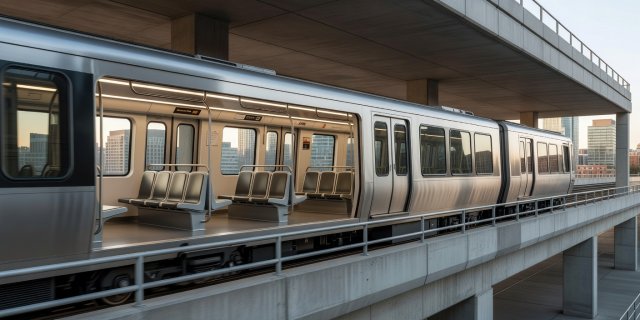
In Vancouver, TransLink’s SkyTrain stands as North America’s longest fully automated driverless light rapid transit network. By leveraging driverless operation since 1985, SkyTrain offers dynamic headways under 90 seconds during peak periods with minimal operating labor constraints.
Light Rail & BRT Evolution
Light Rail Expansions and Arterial Bus Priority
Across the American Sunbelt and Pacific Northwest, cities have made strategic investments to build alternatives to interstate congestion. Seattle’s Sound Transit Link light rail carries over 80,000 riders daily through dedicated underground tunnels and grade-separated bridges connecting Sea-Tac Airport with the urban core and Eastside tech campuses.
Simultaneously, cities unable to fund billions in rail infrastructure have embraced Bus Rapid Transit (BRT). Systems like Cleveland’s HealthLine and Los Angeles’s Metro G Line utilize center-median dedicated bus lanes and off-board fare collection to approximate rail speeds at a fraction of capital expenditure.
Empirical Evaluation
Key North American Transit Corridors Benchmarked
| Corridor / Agency |
System Type |
24-Hour Service |
Peak Headway |
Farebox Recovery (Pre-2020/Current) |
| New York MTA (Subway) |
Heavy Rail (4-track express/local) |
Yes (Full network) |
2.5 – 5 mins |
52% / 32% |
| Toronto TTC / Metrolinx |
Subway + Streetcar + Regional Rail |
Subway until 1:30 AM (Night Bus) |
2 – 4 mins |
68% / 48% |
| Vancouver TransLink (SkyTrain) |
Automated Driverless Linear Motor |
No (NightBus network) |
75 – 120 seconds |
58% / 44% |
| Chicago CTA ('L' Trains) |
Elevated / Subterranean Heavy Rail |
Red & Blue Lines 24/7 |
4 – 8 mins |
49% / 22% |
Discover Latin American BRT Innovations