Regional Rail Infrastructure Report
East Asian High-Frequency Rail Networks
Nowhere on earth does mass passenger rail move higher volumes with greater punctuality than in East Asia’s dense metropolitan clusters. Tokyo, Hong Kong, Seoul, and Taipei provide the world’s foremost masterclasses in systemic capacity and self-sustaining operations.
Operational Marvel
Reciprocal Through-Running (Chokutsu-Unten) in Tokyo
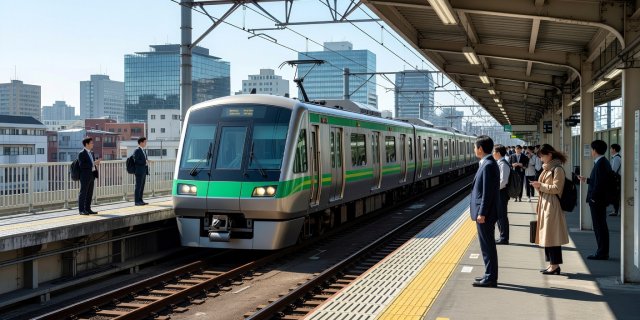
The defining engineering triumph of Greater Tokyo’s rail layout is chokutsu-unten—reciprocal through-running. In traditional 19th-century terminal station designs (such as London or Paris), suburban trains terminate at ring stations, requiring hundreds of thousands of commuters to disembark and overcrowd metro platforms. Tokyo dismantled this bottleneck by running suburban trains belonging to private corporations (Tokyu, Keio, Tobu, Seibu) directly into municipal subway tunnels (Tokyo Metro and Toei Subway).
A passenger boarding in Yokohama on the Tokyu Toyoko Line can travel uninterrupted through the Tokyo Metro Fukutoshin Line underground directly into Saitama Prefecture on the Tobu Tojo Line without ever stepping onto a transfer platform. This inter-running demands strict second-by-second signal synchronisation across independently managed signaling architectures.
Capital Model
Hong Kong MTR: Rail-plus-Property Economics
While municipal transit authorities worldwide suffer severe operating deficits, Hong Kong’s Mass Transit Railway (MTR) operates at a remarkable 170%+ farebox recovery ratio before real estate dividends. The foundation of this balance sheet is the "Rail plus Property" (R+P) development protocol.
The Hong Kong government grants development rights for land surrounding planned stations and depots to the MTR Corporation at greenfield valuation. MTR builds the station alongside integrated residential towers, corporate headquarters, and multi-level shopping centers, generating permanent commercial lease revenues that perpetually subsidize train maintenance and capital rolling stock upgrades.
Capacity & Automation
Seoul Metropolitan Subway & Taipei Metro (TRTS)
Seoul’s multi-operator network—spanning Korail, Seoul Metro, and NeoTrans—features automated CBTC (Communications-Based Train Control) lines like the Shinbundang Line, moving driverless trainsets at speeds up to 110 km/h between Gangnam and suburban Bundang.
In Taiwan, the Taipei Metro (TRTS) consistently ranks highest globally in cleanliness and customer trust metrics. Its elevated Wenhu Line operates rubber-tired medium-capacity driverless trains capable of climbing steep grades while maintaining sub-90-second intervals during morning commuter peaks.
Performance Comparison
Key Metrics: East Asian Mega-Networks
| City / Operator |
Track Gauge |
Annual Ridership |
Platform Screen Doors |
Ticketing Standard |
| Tokyo (Combined Rail & Metro) |
1067mm / 1435mm / 1372mm |
14.6 Billion |
Expanding across all lines |
Suica / Pasmo (FeliCa NFC) |
| Hong Kong MTR |
1432mm / 1435mm |
1.6 Billion |
100% of underground platforms |
Octopus (Sony FeliCa) |
| Seoul Metropolitan Subway |
1435mm Standard |
2.8 Billion |
100% full-height glass doors |
T-Money / Cashbee |
| Taipei Metro (TRTS) |
1435mm / Rubber tire |
780 Million |
100% platform barrier gates |
EasyCard / iPASS |
Compare with European Timetable Systems